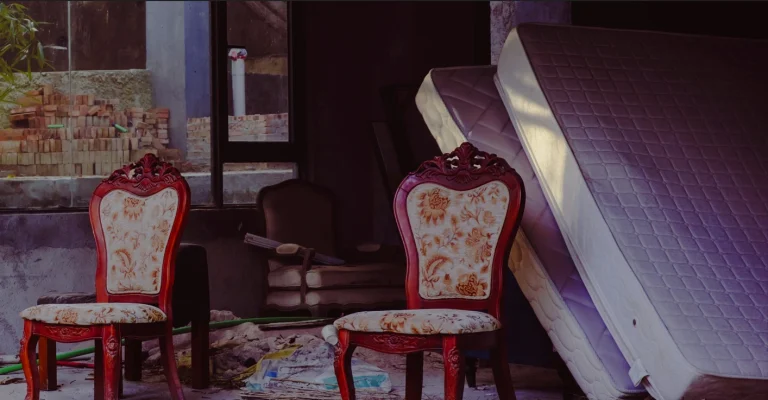
Your new bed arrives on a Tuesday, and by Wednesday there is an old mattress slumped against the garage wall with nowhere to go. It is one of those chores that can make the whole process feel not worthwhile. You cannot exactly leave it at the curb and hope it magically disappears, and tossing it in the trash sometimes isn’t even possible. The good news is that you can recycle an old mattress, or at least keep it out of a landfill, and it takes less effort than you might think once you know your options.
This guide starts with Ohio, since that is home for us, then walks through what to do in every other state. We will cover donation, local haulers, recyclers, and a few honest truths about what works and what does not.
Why Recycling an Old Mattress Matters
A mattress is one of the least landfill-friendly things you own. It is bulky, it resists compaction, and a single mattress can take up around 40 cubic feet of landfill space. Estimates put the number of mattresses discarded in the United States somewhere between 15 and 20 million every year, and most of them go straight into the ground where they can sit for decades.
Here is the part that makes recycling worth the effort: as much as 80 to 90 percent of a typical mattress can be recovered. The steel springs get melted down and reused. The foam becomes carpet padding. The wood from the frame gets chipped for mulch or biomass. Very little of it actually needs to be thrown away, which is exactly why sending a whole mattress to a landfill is such a waste of good material.
Start Here: Can Your Mattress Be Donated?
Before you pay anyone to haul it off, ask one question. Is it still clean and usable? If the answer is yes, donation is the best outcome, because someone who needs a bed gets one and nothing goes to waste.
The catch is that charities are strict, and for good reason. A donated mattress needs to be free of stains, rips, odors, and any sign of pests. If it has real damage or a smell you cannot get out, skip donation and move straight to recycling or disposal, because the charity will only end up throwing it out themselves.
A couple of honest notes that save people a wasted trip:
- Call first, every time. Acceptance depends on the local branch, their current storage, and their trucking schedule.
- Most Goodwill locations do not take mattresses, so do not assume that one is your answer.
- Some well-known bed charities only give out new beds and do not accept used mattresses at all, so they are not a disposal option no matter how good your intentions are.
When a mattress is genuinely in good shape, furniture banks are usually your best friend. They exist specifically to get beds to families who are starting over, and many will even arrange a pickup.
How to Recycle an Old Mattress in Ohio
Here is the honest local truth. Ohio is not one of the states with a funded mattress recycling program, and central Ohio waste authorities plainly say there are currently no free local recycling options for mattresses. That does not leave you stuck, it just means you pick from a short list of real options.
- Donate it if it qualifies. The Furniture Bank of Central Ohio accepts mattresses in good condition and puts them directly to work for local families. Confirm their current standards before you load up.
- Use a local hauler. Columbus-area removal services will pick a mattress up from your garage or curb for a fee, which is the easy button if you cannot transport it yourself.
- Take it to the county. If it is past saving, your county solid waste district or transfer station will accept it for disposal. Some areas ask you to wrap it in plastic first, so check the rules before you drive over.
- Scrap the metal separately. Even when a mattress cannot be recycled locally, an old metal bed frame or box spring can usually go to a scrap metal yard rather than the trash.
What About the Rest of the Country?
If you are reading this from outside Ohio, your options come down to which of two groups your state falls into.
The four program states, plus one. California, Connecticut, Oregon, and Rhode Island each run a free statewide recycling program under the Bye Bye Mattress brand, paid for by a small fee added to new mattress sales. If you live in one of them, you can drop a mattress at a participating site at no extra charge. Massachusetts is a special case: it bans mattresses from landfills entirely but does not fund a free program, so residents there must recycle but usually pay a modest fee to do it.
Everywhere else. The other 45 states have no statewide law, so it comes down to local options. Rather than chase a specific charity that may have changed its rules since this was written, start with the tools that stay current no matter where you are:
- The Bye Bye Mattress facility finder to check for any drop-off sites near you.
- Earth911’s recycling search, where you enter your zip code and the item and it lists what is available locally.
- Habitat for Humanity ReStore, which will sometimes take a mattress in good shape, though acceptance varies by store, so call before you load up.
A handful of standout recyclers are also worth knowing by name. Spring Back Recycling is a nonprofit that breaks down mattresses and employs people rebuilding their lives, with facilities in Tennessee, North Carolina, Colorado, Utah, and Washington. DTG Recycle operates mattress recycling centers across Washington State. In the Delaware, southeastern Pennsylvania, southern New Jersey, and northern Maryland area, a smaller recycler called Delaware Green is rolling out residential service as well. All of these links are gathered at the bottom of this post.
How to Prep a Mattress for Pickup or Drop-Off
Whichever route you choose, a little prep makes the handoff smoother.
- Strip and wash the bedding, and let the mattress air out for a day if you can.
- Measure your doorways and stairs before moving day, because a queen that went in years ago is not always eager to come back out.
- Wrap it in plastic if your city requires it. Many bulky-waste programs will not take an unwrapped mattress, and a plastic mattress bag keeps it dry and dust-free in the meantime.
Taking care of what you own is the same instinct that keeps a mattress out of the waste stream in the first place, and our furniture care guide carries that same idea across the rest of your home.
The Bigger Picture: America’s Mattress Waste Problem
Step back from your own garage for a second, and the scale of this is striking. Tens of millions of mattresses are discarded in this country every year, and the recycling infrastructure to handle them barely exists outside a few states. This is not one family’s fault, and it is not any single company’s to fix. It is a shared gap, and gaps get closed when enough people simply become aware of them.
So consider this the awareness part. If you want to be part of the answer, here are a few genuine ways to chip away at mattress waste:
- Recycle or donate instead of trashing, every time it is possible.
- Support producer-responsibility programs like the ones already working in California, Connecticut, Oregon, and Rhode Island, which prove the model can scale.
- Buy from retailers who take back old mattresses when they deliver a new one.
- Choose products built to last. This is the quiet one, and it may matter most.
That last point is where we will plant our flag, gently. The single most effective way to reduce mattress waste is to create less of it, and a mattress that lasts longer is simply one fewer mattress headed for a landfill. It is why we care about how the beds we carry are made. Monarch Rest mattresses, for example, are handcrafted and made to order right in Sugarcreek, Ohio, and many are built double-sided so they can be flipped and rotated for more even wear over their life. Durability is not just a comfort story, it is a waste story too.
The longer these products last, the less waste we create, and the more breathing room the whole country gets to build the disposal, reuse, and recycling systems we still need.
Ready for the Next One?
When it is finally time to replace an old bed, the most responsible choice starts before the mattress ever wears out, with one that is built to go the distance. Explore our handcrafted mattress collection, or reach out for a consultation and we will help you find a bed made to last for years, not seasons.
Mattress Disposal Resources by State
Every link below was checked and live as of July 2026. Local programs, hours, and acceptance rules still change, so a quick call ahead never hurts. When in doubt, the two zip-code search tools work anywhere in the country.
Free statewide programs
- California, Connecticut, Oregon, Rhode Island (free drop-off) — Bye Bye Mattress
- Massachusetts (landfill ban, recycling required, usually for a fee) — find a site through the Bye Bye Mattress facility finder
Nationwide search tools (the reliable everywhere-options)
- Bye Bye Mattress facility finder
- Earth911 recycling search
- Habitat for Humanity ReStore (donation, acceptance varies by store, call first)
Standout recyclers
- Spring Back Recycling — org hub covering TN, NC, CO, UT, and WA
- Spring Back Colorado
- Spring Back Utah
- DTG Recycle — Washington State
- Delaware Green Mattress Recycling — DE, PA, NJ, MD area, residential service rolling out
Paid nationwide pickup (when you just need it gone)
Ohio (our home base)
- Furniture Bank of Central Ohio — takes mattresses in good condition
- For disposal, contact your county solid waste district or transfer station
Steve Payne is content writer at Millwest Amish Furniture in Plain City, Ohio. He writes about solid wood craftsmanship, furniture care, mattress selection, and the materials that make Amish-built furniture last for generations. With deep roots in Ohio’s furniture community and direct access to Millwest’s network of Amish craftsmen, Steve brings a practical, experience-driven perspective to every article.