When my oldest daughter was a toddler, she climbed every mountain, explored every forest, and fell from all things great and tall. Well, maybe I am exaggerating a little. But she did climb every oven door, every dresser she could find, and every counter she could pull herself onto. For years the soundtrack of our house was “Get down from there!” and “Stop climbing on that!” If you are raising little ones, you know these ancient hymns well.
I remember the first time I screwed a piece of furniture into the wall. It was because she had pulled her brother’s dresser over on herself. We were lucky. It was a little toddler dresser, a small thing that did not weigh much, but my wife and I still called 911, because the goose egg on her head was nothing to shrug off. She was fine. The dresser got screwed to the wall that same day, and so did everything else in the house. That scare is exactly why dresser tip-over safety is something I care about, and it is why I am glad the rules around it have changed.
What Is the STURDY Act, and Why Does Dresser Tip-Over Safety Matter?
New regulations do not usually make me cheer. The STURDY Act is one that does. Most clothing storage furniture built after September 1, 2023 now has to meet this federal safety standard. The name stands for Stop Tip-overs of Unstable, Risky Dressers on Youth, and it exists for a sobering reason. Furniture tip-overs have caused hundreds of deaths and tens of thousands of emergency room visits over the past two decades, and most of the victims were small children doing exactly what my daughter did: climbing.
The law requires dressers, chests, and armoires to stay upright under conditions that mimic a child’s weight and curiosity. Every applicable piece we carry meets this standard. Manufacturers reach that bar in a few different ways, which is why the pieces in your home may behave a little differently from one another.
The Hidden Feature Every Compliant Piece Shares
No matter which brand you brought home, every compliant piece on our floor relies on counterweights. These are hidden weights, usually set low and toward the back, that lower the furniture’s center of gravity. You will never see them, but they are a big part of why a loaded dresser resists tipping. Think of them as ballast in the hull of a boat. The boat sits low and steady even when the deck is busy.
Counterweights are the common thread across everything we sell. From there, you may notice one of two behaviors, and both are completely normal.
Why Your Dresser May Only Open One Drawer at a Time
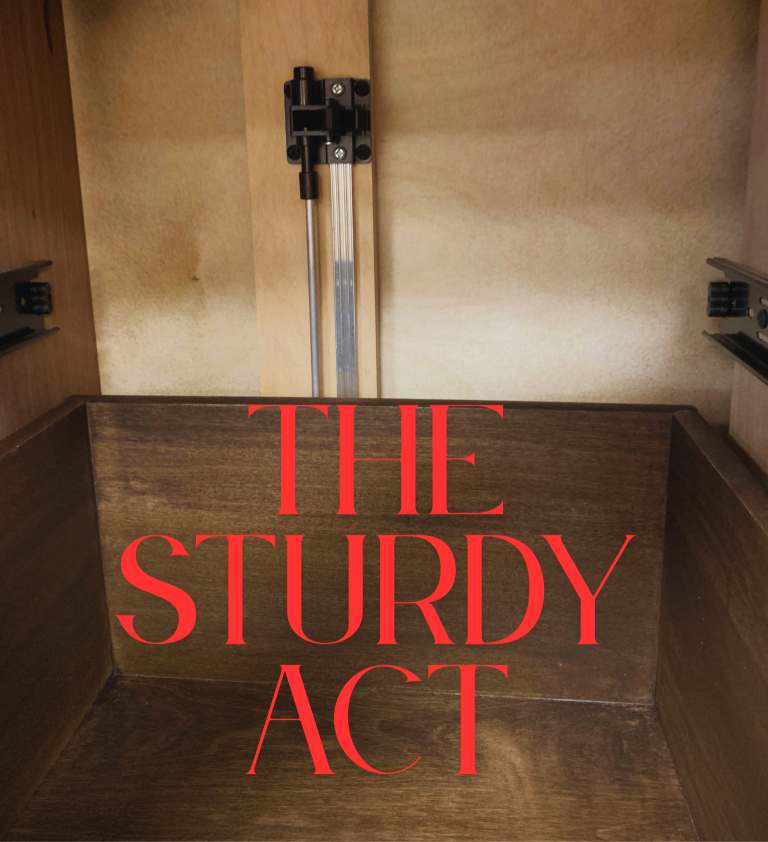
Many pieces add a second layer of protection called an interlock. An interlock is a simple mechanism that allows only one drawer to be open at a time. Close the open drawer, and the next one releases. This keeps several heavy, loaded drawers from hanging out the front all at once, which is the precise situation that tips furniture forward. It is, in other words, built to stop exactly the kind of accident we had.
If your dresser does this, nothing is wrong with it. It is working exactly as designed. Most of the pieces we carry use an interlock of some kind, so this is the behavior you are most likely to see.
What You’ll Notice About Your Dresser
There are really two patterns, and you can recognize yours right away.
You may find that a second drawer will not open while one is already out. That piece has an interlock. Close the first drawer and the next one frees up. This is intentional, and it is one of the ways the piece stays stable in everyday use.
Or you may find that every drawer opens freely, whenever you like. That piece does not use an interlock. It stays safe through its counterweights and its drawer slides, which are built so a drawer cannot extend far enough to lever the unit forward.
Both designs pass the same federal test. They simply get there by different routes, and either one is a sign that your furniture was built to the current standard.
The Step That Matters More Than Any of This
Here is the part we cannot say loudly enough, and it is the lesson I learned the hard way that afternoon with the 911 call. Counterweights and interlocks both help, but anchoring your furniture to the wall is what truly prevents a tip-over. Every compliant piece now ships with an anchoring kit right in the box, and we strongly encourage every household to use it, especially homes with young children. An anchored dresser cannot tip no matter how many drawers are open or how determined a little climber happens to be.
It takes only a few minutes, and it is the single most effective thing you can do. The Consumer Product Safety Commission runs a clear, free walkthrough at anchorit.gov if you would like step-by-step guidance, and you can read the official scope of the standard on the CPSC’s Clothing Storage Units page.
Built to Last, and Built to Be Safe
Solid wood clothing storage is made to last for generations, and the safety features on today’s pieces are there so the next generation reaches adulthood safely. The same care that goes into quality solid wood construction now goes into stability, and pieces in long-lasting woods like oak are designed to stay in your family for decades.
My daughter is well past the climbing years now, and that little dresser left nothing behind but a story we still tell. Plenty of families have not been as lucky, and that is the whole reason a regulation like the STURDY Act is worth celebrating. Once you understand how dresser tip-over safety works, anything your dresser does to keep your family safe stops being a mystery and starts being reassurance.
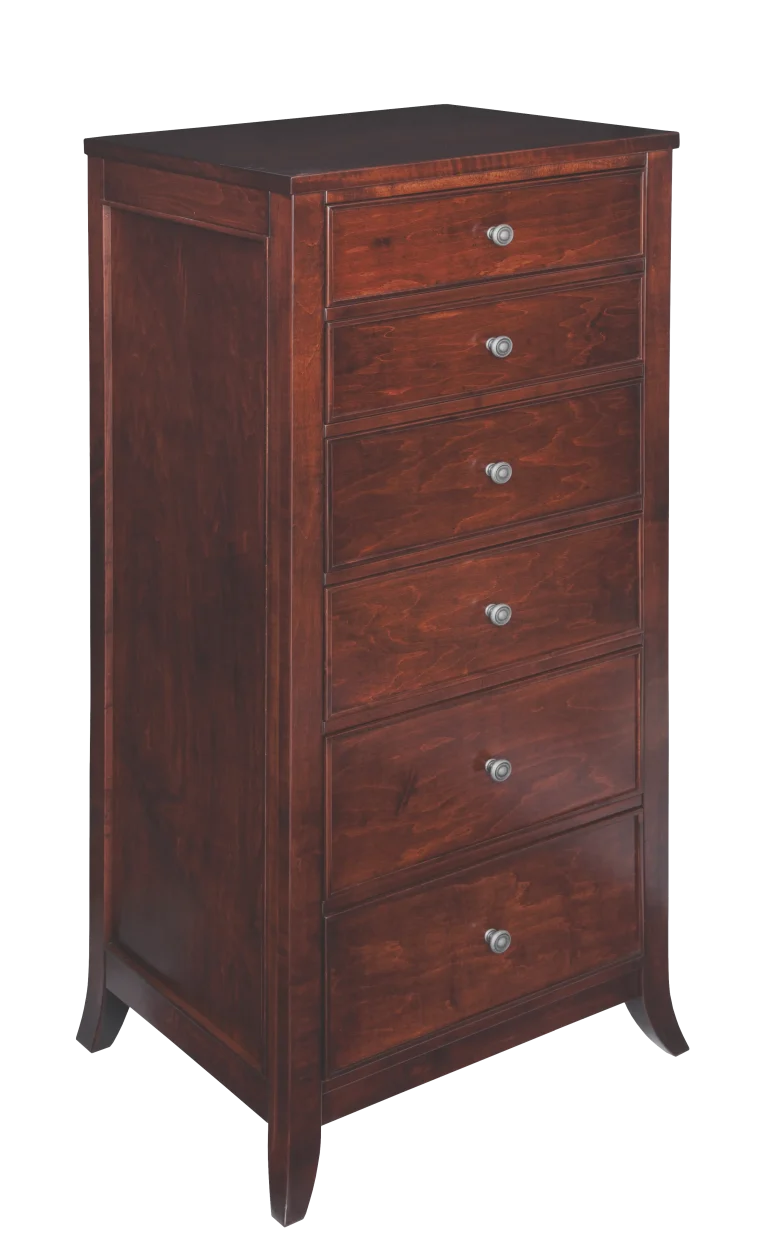
Browse our bedroom collections to see the dressers, chests, and lingerie chests we carry, or contact us with any question about your specific piece. We are always glad to help.
Steve Payne is content writer at Millwest Amish Furniture in Plain City, Ohio. He writes about solid wood craftsmanship, furniture care, mattress selection, and the materials that make Amish-built furniture last for generations. With deep roots in Ohio’s furniture community and direct access to Millwest’s network of Amish craftsmen, Steve brings a practical, experience-driven perspective to every article.