When I was a boy in the 80s, daytime TV was dominated by soap operas. A day home sick from school could get boring fast, once playing G.I. Joes or My Pet Monster was more than a mom or dad would tolerate. Luckily, PBS kept my attention. I loved watching Julia Child bring French cooking to America, Justin Wilson spotlight Creole cooking, Bob Ross turn our accidents into happy little trees, and of course the handiest man of them all, Bob Vila.
My love of cooking started there, and so did my appreciation for art. If pressed, I would say my interest in woodworking and construction started there too. Bob Vila did not often build furniture from what I remember, but he worked with wood and showed the different joinery methods used in construction.
Here is the thing I have learned in my time at Millwest: furniture is its own craft, with its own joints, and they are not the same ones that hold a house together. The Amish builders behind these pieces aim for something specific, a five-generation lifespan, and every joint they choose serves that goal. Some I already half-knew, like the interlocking dovetails in a drawer. Plenty more I did not. So let me tell you about them.
First, the Goal: Built to Last Five Generations
Most furniture today is built to a price. Manufacturers lean on dowels and glued biscuits and metal fasteners because they are fast and cheap, and the piece holds together well enough for a while. Amish joinery starts from a completely different question: how do we build something that survives a century of daily use and Ohio’s swinging humidity?
That goal changes every decision. The joints below are not chosen to look impressive. They are chosen because they counter the way wood naturally moves and because they carry real weight without ever loosening. Once I understood that, the techniques stopped looking like tradition for tradition’s sake and started looking like very smart engineering.
Interlocking Dovetails: The Joint That Tightens When You Pull
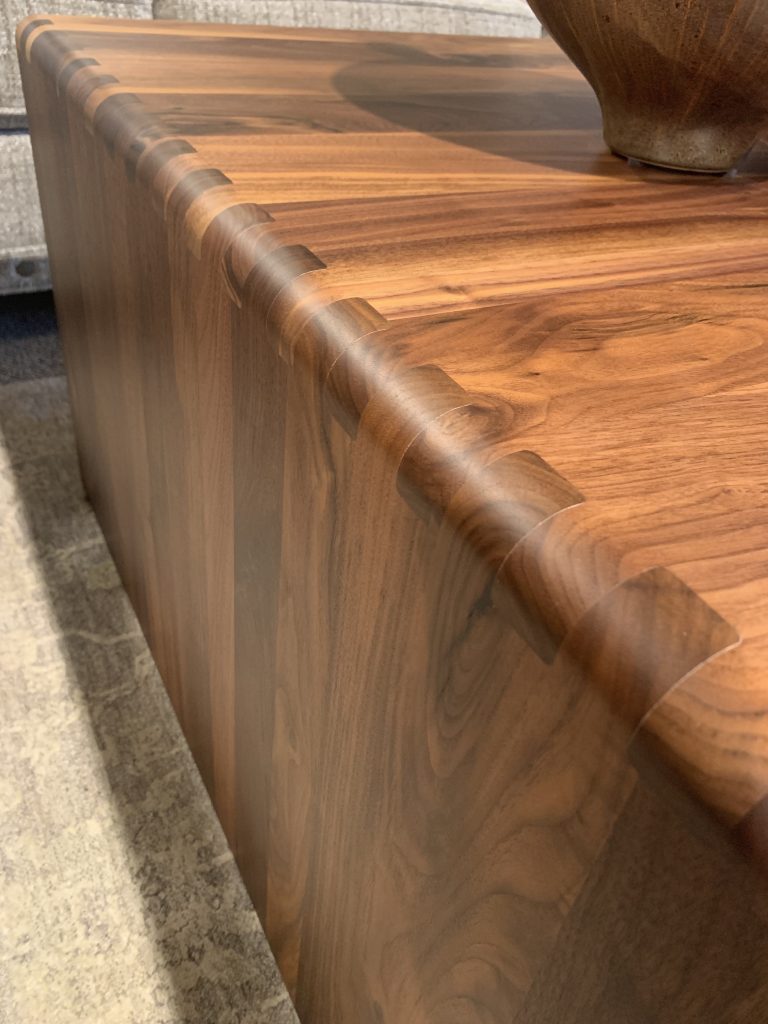
 Pull open a well-made drawer and look at the front corner, where the side meets the front. If you see a row of interlocking, wedge-shaped teeth laced together like puzzle pieces, those are dovetails.
The genius is in the flare of the shape. Because the wedges angle outward, the joint actually tightens the harder it is pulled, which is exactly what a drawer endures every single day for decades. It physically cannot pull apart or warp loose. Cheaper drawers are often just glued and stapled at that corner, and that is the first spot to fail. So this is the fastest tell in any showroom: open a drawer, look at the corner, and the furniture tells on itself.
Deep Mortise and Tenon: The King of Joints
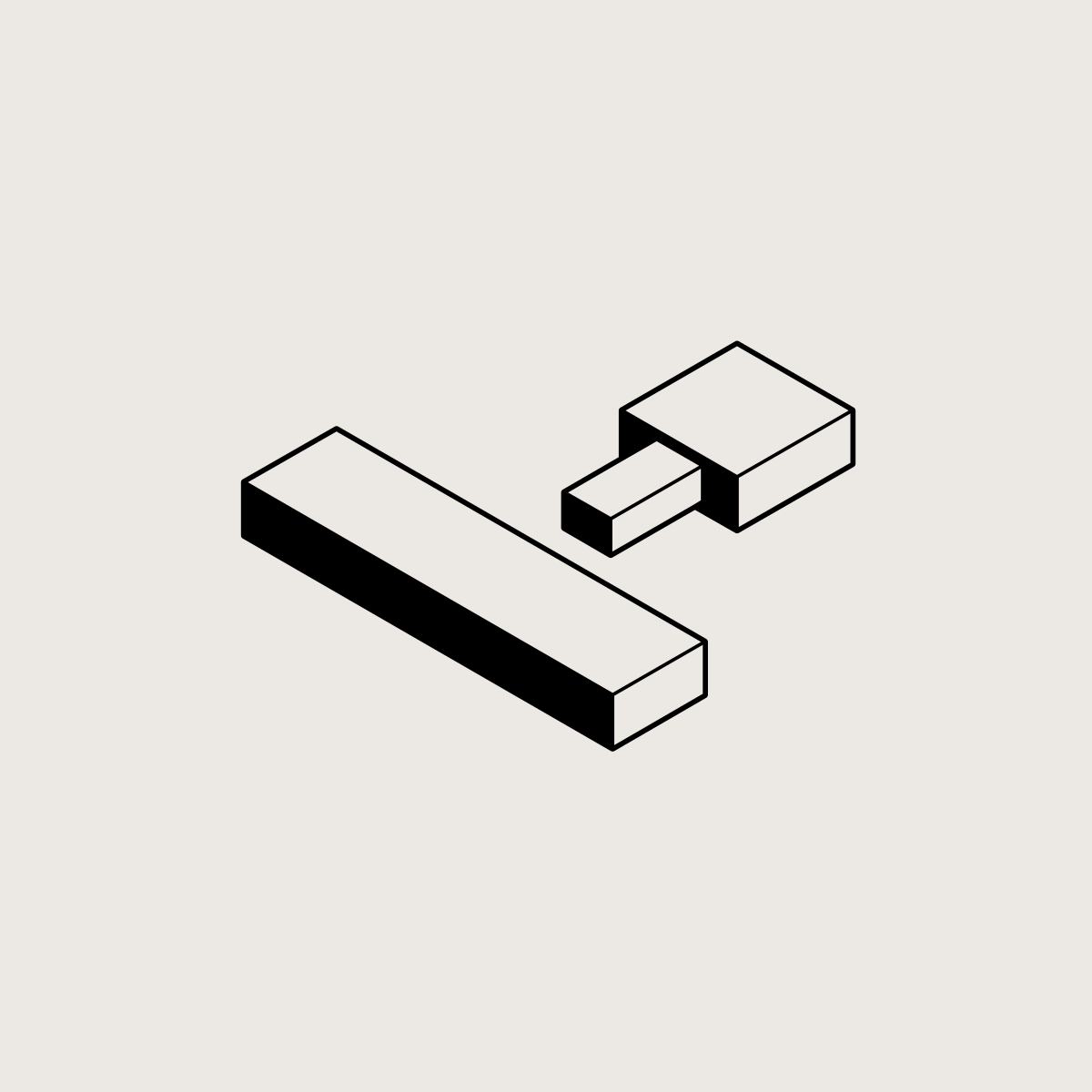 This is the joint doing the heavy lifting in any frame. A projecting tongue, the tenon, is cut on the end of one board and fitted into a carved square slot, the mortise, on another. Slide them together and you get an enormous amount of interlocking contact, plus a huge surface for glue to grab.
It earns its “king of joints” reputation wherever two pieces meet under stress, table legs, bed frames, chair rails. It stands up to both downward load and side-to-side racking. The tell here is what you do not see: look under a dining table base or at the corners of a headboard, and the connection should look seamless, with no external brackets and no visible metal. The wood is holding the wood.
Hand-Pegged Joinery: Wood Instead of Screws
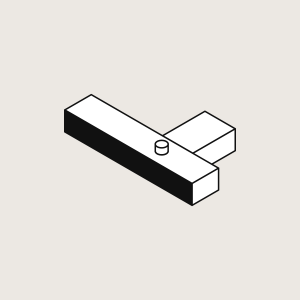 This was the technique that genuinely surprised me, because it is the most distinctly Amish thing in the whole list. To lock a mortise and tenon permanently, the builder drills a hole straight through the assembled joint and drives a wooden peg into it. No screw, no bracket. Wood pinning wood.
Here is why that is not just for looks. A metal screw stays rigid while the wood around it swells and shrinks with the seasons, and over years that fight loosens the joint. A wooden peg moves with the frame, expanding and contracting at the same rate as everything around it, so the joint stays tight for generations. The same logic shows up in how a quality tabletop or door panel is built to float within its frame rather than being locked solid, the wood is always given room to breathe. The tell: look for small, deliberate square or round wooden pins on table legs, bed posts, and cabinet faces. Those are not decoration.
Dado and Rabbet Grooves: Shelves That Will Not Sag
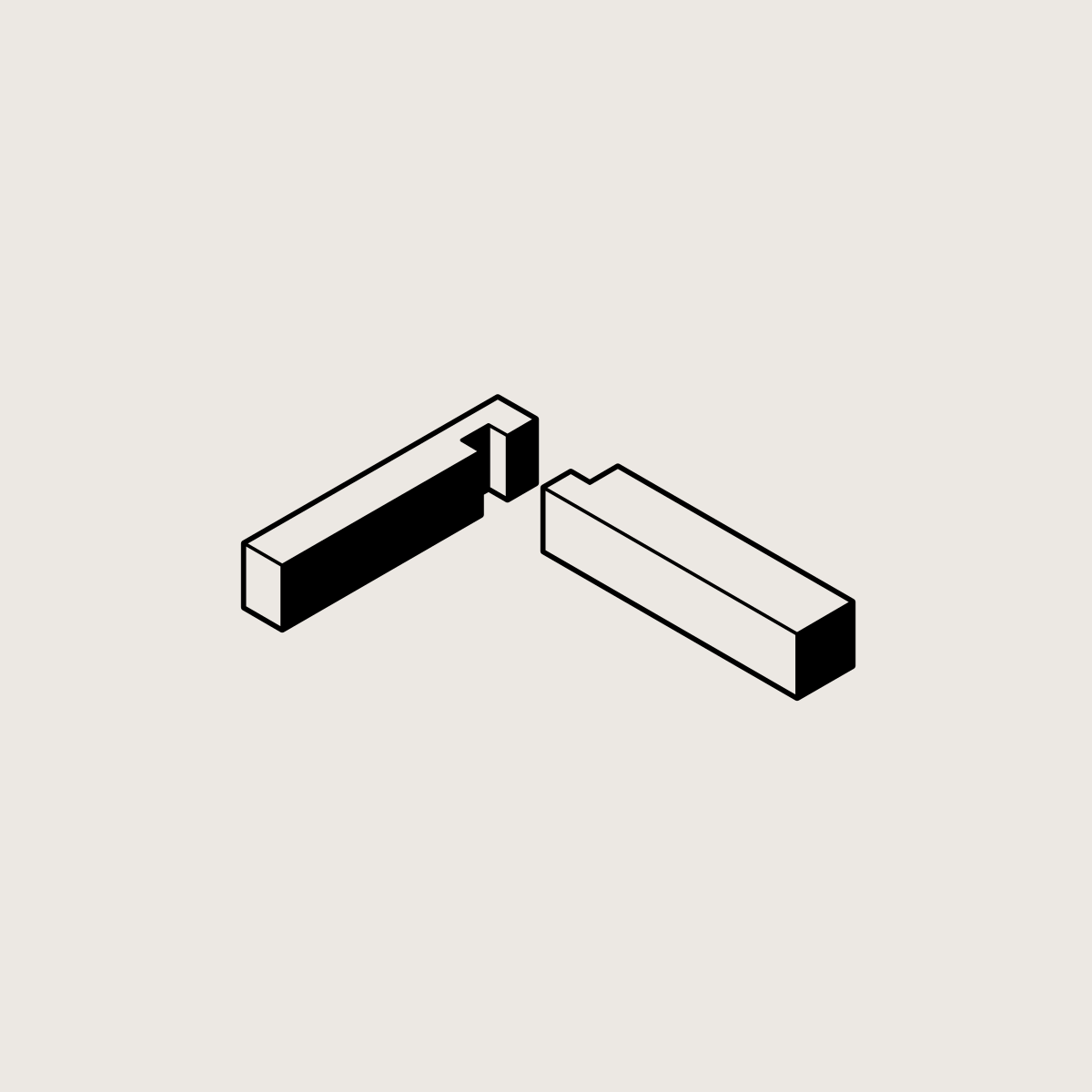 Open a solid wood bookcase, dresser, or hutch and look at how the shelves meet the sides. In a quality piece, the shelf is not resting on a few flimsy metal pins. It slides into a channel cut directly into the side panel, a dado, while rabbets along the back edges lock the case square.
The point is load. When a shelf is cradled in a groove cut into solid hardwood, the frame itself carries the weight across the whole span, which is why a well-built case piece can hold a lifetime of books or dishes without bowing in the middle. It is a quiet joint you rarely notice, and that is rather the point.
It Starts Before the First Cut: Reading the Wood
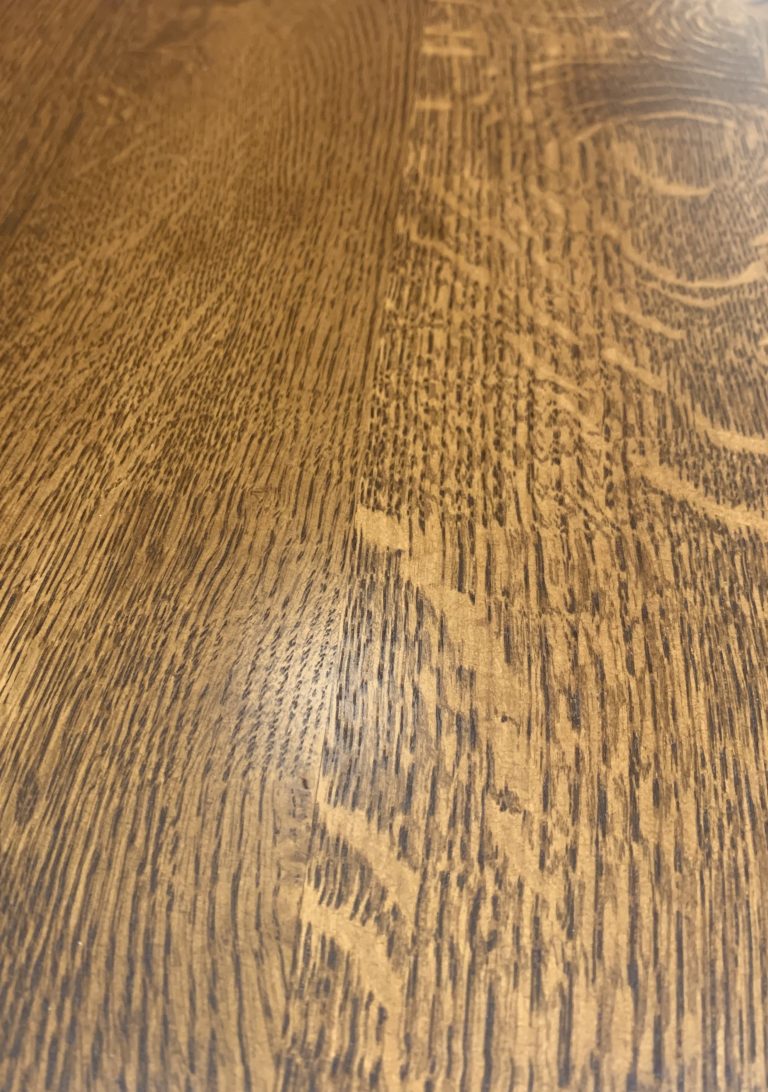
The last thing I learned is that the best joinery begins before any joint is cut at all. Experienced builders study the end-grain of American hardwoods like oak, cherry, maple, and walnut, and they favor cuts of lumber with straight, vertical grain because that wood moves the least as the seasons change. Build with wood that expands predictably, and precision joints stay tight for a century. Build with wood that twists, and even a perfect joint eventually fights itself.
This grain question runs deep enough that one cut in particular, quarter-sawn white oak, deserves its own conversation. Watch for a new blog on this subject.
Why Any of This Matters to You
Here is where I landed after all this learning. You do not need to become a woodworker to shop smarter, you just need to know where to look. Open the drawers and check the corners. Look under the table for brackets, or the absence of them. Notice whether shelves slide into the frame or perch on little pins. Hunt for wooden pegs. Each of those is a small vote for furniture you hand down rather than furniture you replace.
If you want to keep pulling this thread, it helps to understand the wood species themselves, since the wood and the joinery work as a team, and to see how a hardworking hardwood like hard maple earns its keep. How different woods compare also shapes how a finished piece holds up over a lifetime.
Browse our solid wood bedroom collection and dining collection to see this kind of joinery up close, or dig into our wood characteristics guide to learn more about the material behind the craft.
Steve Payne is content writer at Millwest Amish Furniture in Plain City, Ohio. He writes about solid wood craftsmanship, furniture care, mattress selection, and the materials that make Amish-built furniture last for generations. With deep roots in Ohio’s furniture community and direct access to Millwest’s network of Amish craftsmen, Steve brings a practical, experience-driven perspective to every article.