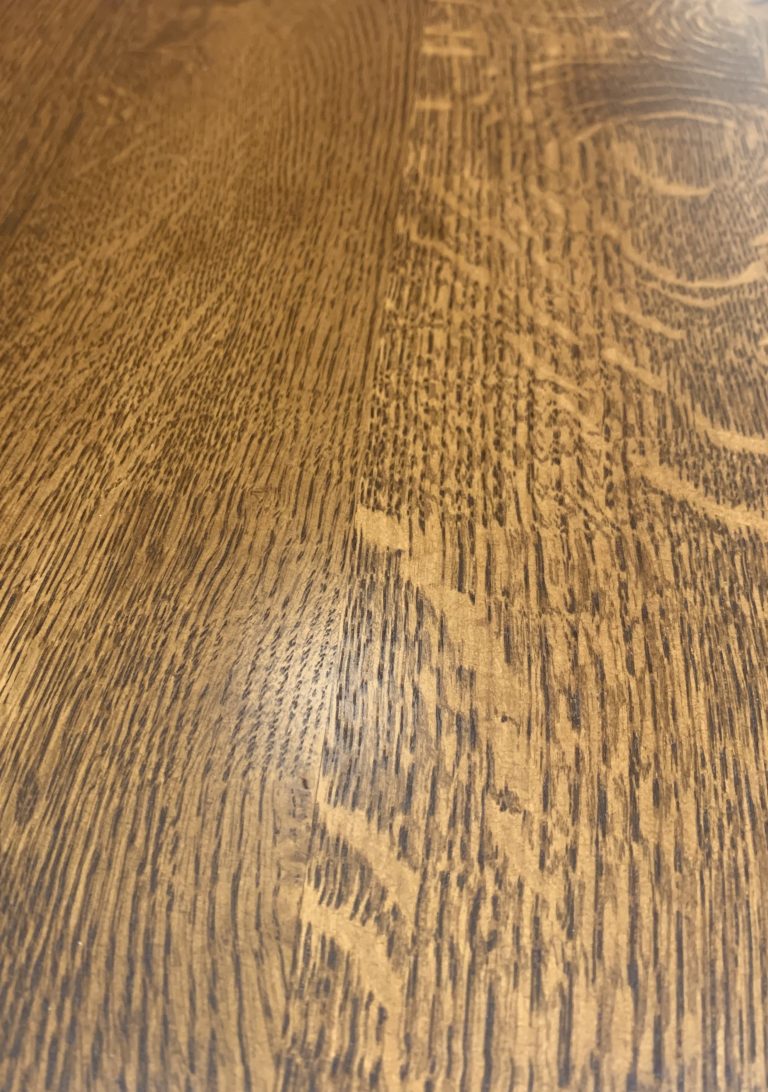
If you have shopped for solid wood furniture, you have probably seen the term quarter-sawn white oak attached to some of the most striking, and most durable, pieces on the floor. It usually costs more than ordinary oak, and there are good reasons for that. The difference is not marketing. It comes down to how the log is cut, how the wood behaves over time, and a distinctive figure in the grain that you cannot get any other way.
This post picks up a promise from our earlier look at oak, where we mentioned that quarter-sawn white oak deserves its own conversation. Here it is.
Plain-Sawn vs. Quarter-Sawn: It Starts at the Sawmill
Most lumber is plain-sawn, also called flat-sawn. The log is run through the saw in parallel slices, the fast and economical way to cut, which produces the familiar arching, cathedral-style grain you see on a lot of furniture. It is perfectly good wood, and it is what most boards are.
Quarter-sawing is different and more demanding. The log is first cut into quarters, and then each quarter is sliced so the blade meets the growth rings at a steep angle, close to perpendicular to the board’s face. This wastes more wood and takes more time, which is the main reason quarter-sawn lumber commands a higher price. But that perpendicular grain orientation is exactly what gives the wood its two signature advantages.
The First Payoff: Dimensional Stability
All solid wood moves. It expands and contracts with seasonal changes in humidity, and that movement never fully stops. The direction and amount of that movement depend heavily on how the grain runs through the board.
Because quarter-sawn boards have their growth rings running roughly vertical through the thickness, they move far less across their width than plain-sawn boards do. In plain terms, quarter-sawn white oak is less likely to cup, warp, or twist as the seasons change. For a piece of furniture meant to last for generations through humid summers and dry, heated winters, that stability is a genuine functional advantage, not just a talking point. A tabletop that stays flat and joints that stay tight both trace back to how the wood was cut.
The Second Payoff: The Ray-Fleck Figure
Here is the part you can actually see. White oak contains structures called medullary rays, which run outward from the center of the tree like spokes on a wheel. When the log is plain-sawn, the saw rarely crosses these rays in a way that reveals them. When it is quarter-sawn, the blade slices across them, exposing dramatic ribbons and flecks that shimmer across the surface of the board.
This is the famous ray fleck, sometimes called tiger rays or flecking, and it is unique to quarter-sawn oak. The effect shifts as light moves across it and as you change your viewing angle, giving the wood a depth and movement that a flat-sawn board simply does not have. It is one of those things that looks good in a photo and looks markedly better in person. Many people who pay the premium for quarter-sawn white oak are paying as much for this figure as for the stability.
Why White Oak Specifically
It is worth noting that white oak and red oak are not interchangeable, and the distinction matters here. White oak has a tighter, more closed grain structure, and its cells are naturally plugged in a way that makes it more water-resistant and dense than red oak. That density and tight grain are part of why white oak takes the quarter-sawn treatment so beautifully and why it has long been the choice for furniture meant to endure.
The pronounced ray fleck shows up most strongly in white oak, which is why quarter-sawn white oak, often shortened to QSWO, became the standard-bearer rather than quarter-sawn red oak.
A Quick History: Mission and Arts and Crafts
Quarter-sawn white oak is tied tightly to one of the most influential furniture movements in American history. In the early 1900s, the Arts and Crafts and Mission styles, associated with makers like Gustav Stickley, championed honest materials, visible joinery, and clean, sturdy lines. Quarter-sawn white oak was their wood of choice, prized for both its strength and its striking ray fleck, which fit the movement’s appreciation for natural beauty over applied ornament.
That heritage is still alive in furniture today. When you see a Mission-style piece in quarter-sawn white oak, you are looking at a direct descendant of that tradition, built the same way and for the same reasons more than a century later.
What Furniture Benefits Most From Quarter-Sawn White Oak
Quarter-sawn white oak shines brightest on the pieces where its two strengths actually come into play. Knowing where those are can help you decide when the upcharge is worth it and when ordinary oak will serve you just as well.
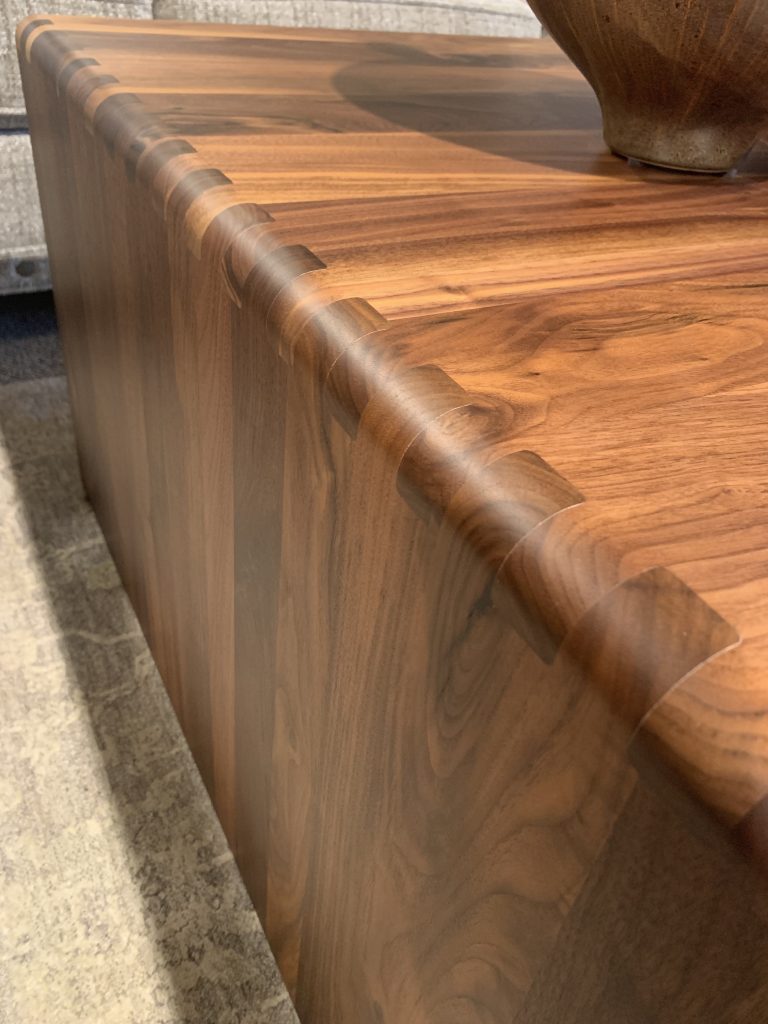
Large flat surfaces are the clearest winners. Dining tabletops, desk surfaces, and dresser tops are exactly where plain-sawn wood is most prone to cupping or warping over the years, so the dimensional stability of quarter-sawn lumber pays off directly. These broad, open surfaces also give the ray-fleck figure room to spread out and catch the light, so you get the practical benefit and the visual one in the same piece.
Mission and Arts-and-Crafts furniture is the wood’s natural home. The clean, unadorned lines of these styles were designed around quarter-sawn white oak in the first place, and they let the flecking become the centerpiece rather than competing with heavy carving or ornament. If you love that look, this is the wood it was meant to be made from.
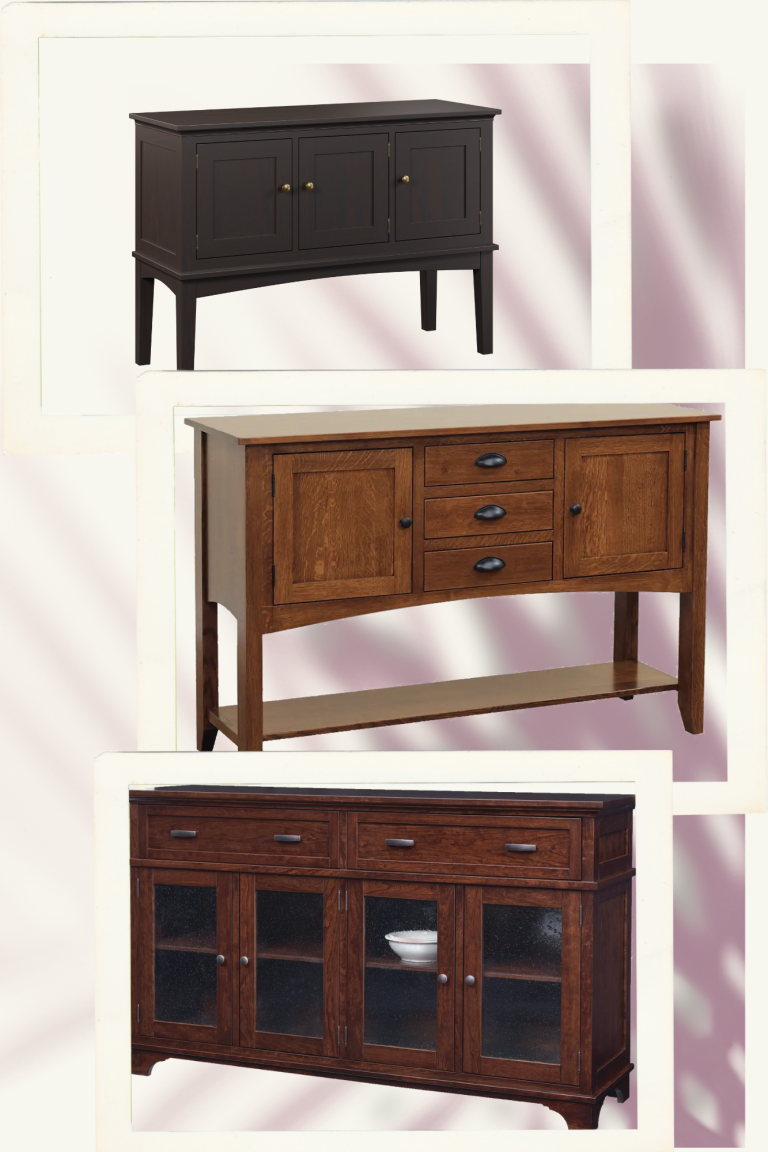
Heirloom case goods round out the list. Bookcases, sideboards, and full bedroom suites lean on white oak’s density and wear resistance, which is what lets a piece take decades of daily handling and still hold its joints and its finish.
It is worth being honest about where the premium makes less sense, too. On small accent pieces, heavily carved designs, or anything destined for a painted finish, you would rarely see the ray fleck at all, so you would be paying for a signature feature you cannot enjoy. In those cases, plain-sawn oak or another hardwood is often the smarter buy. Quarter-sawn white oak rewards you most when you can both see its figure and put its stability to work.
Caring for and Choosing Quarter-Sawn White Oak
In daily life, quarter-sawn white oak is as practical as it is handsome. Its density makes it hard-wearing and resistant to the dents and dings of everyday use, and the same stability that keeps it flat also helps it hold a finish well over time. It is a wood that ages gracefully rather than wearing out.
If you are weighing it against other options, it helps to understand how the major furniture hardwoods stack up. Our look at the best wood for dining room tables walks through how different species compare, and our broader introduction to wood covers how solid hardwoods behave in general. If you love the durability conversation, the way a wood like hard maple earns its reputation makes for a useful comparison.
Be sure to explore the customization options on our online catalogue of furniture to find what stain and hardware is best for your furniture. Stain and hardware options vary by furniture piece and wood type. Some stains work better on certain woods, and hardware options may vary by collection.
Browse our solid wood dining collection and bedroom collection to see quarter-sawn white oak in person, or explore our wood characteristics guide to compare it against every species we offer.
Steve Payne is content writer at Millwest Amish Furniture in Plain City, Ohio. He writes about solid wood craftsmanship, furniture care, mattress selection, and the materials that make Amish-built furniture last for generations. With deep roots in Ohio’s furniture community and direct access to Millwest’s network of Amish craftsmen, Steve brings a practical, experience-driven perspective to every article.