Walk into any bedroom furniture showroom and you’ll hear these two terms tossed around like they mean the same thing. Sometimes they do, sometimes they don’t, and the confusion has cost a lot of people closet space they didn’t realize they needed. So before you order a piece of bedroom furniture you’ll be living with for the next thirty years, it’s worth understanding the difference between a chest of drawers vs. dresser, because the right choice depends entirely on how you actually use your bedroom.
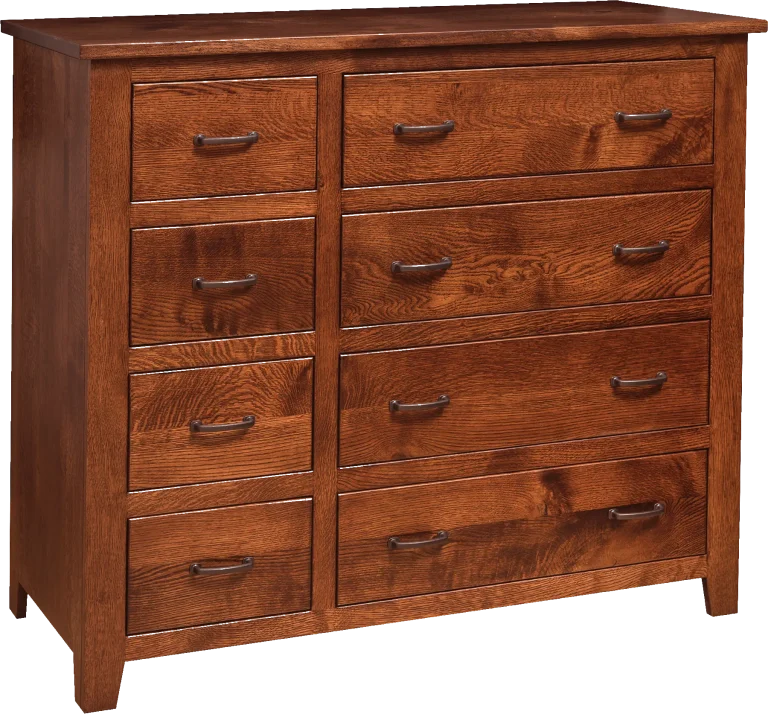
Here’s the short version. A dresser is wider than it is tall, usually with two columns of drawers side by side, and traditionally pairs with a mirror. A chest of drawers is taller than it is wide, with drawers stacked in a single column. That’s the structural difference. The lifestyle difference is where it actually matters.
The Chest of Drawers, Built for Going Vertical
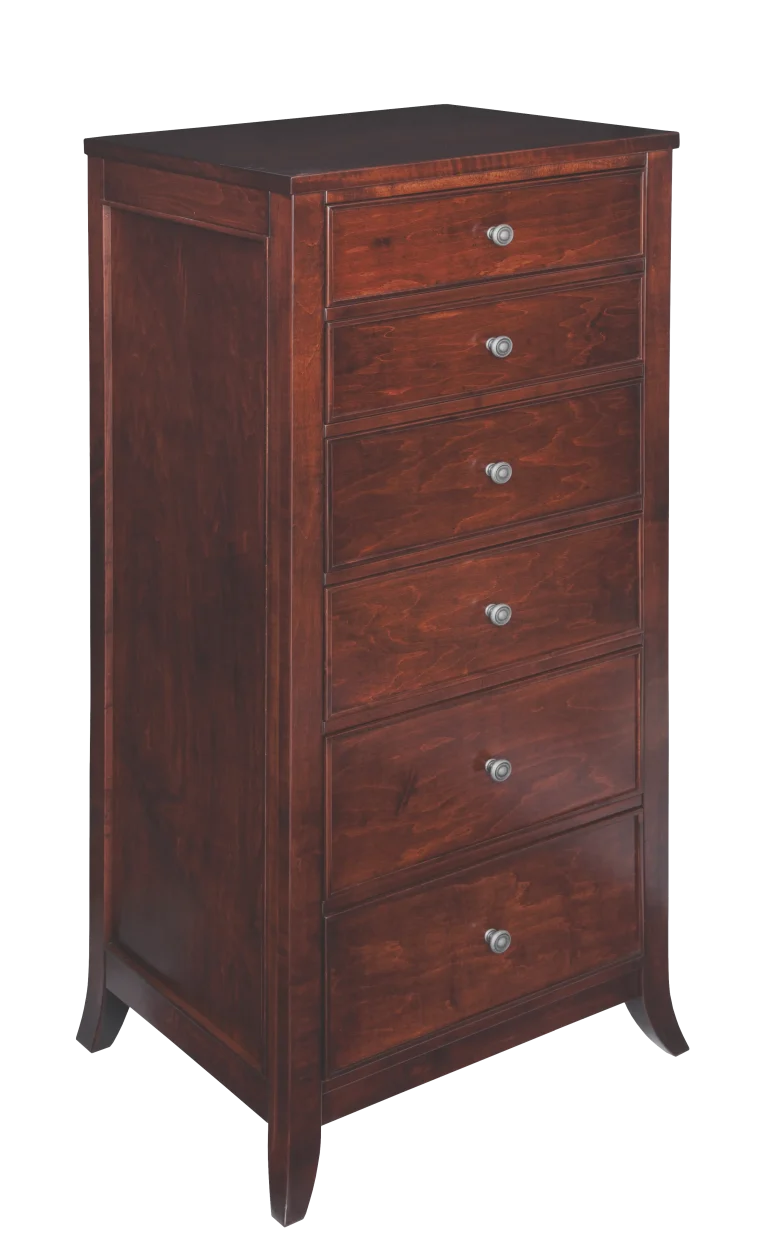
A chest of drawers is what you reach for when floor space is at a premium and you’ve got a lot of clothes to store. By stacking the drawers vertically, a chest gets you serious storage capacity without eating up wall space. Five-drawer chests are common, seven-drawer versions exist, and some Amish-built chests stretch even taller for folks who really need the room.
Chests also tend to be more practical for items you fold and stack: sweaters, jeans, t-shirts, things you don’t need to lay flat. The drawers in a chest are usually deeper than dresser drawers, which means more cubic inches of storage per drawer.
The trade-off is height. A tall chest can be awkward to reach into for shorter folks, and the top drawer might end up at chest level or above. That’s not a dealbreaker, but it’s worth thinking about before you order one.
The Dresser, Built for Spreading Out
A dresser does the opposite. It spreads horizontally, which gives you a wider top surface and brings everything down to a more accessible height. That top surface is the dresser’s secret weapon. It’s where the jewelry box goes, where you set down your keys, where the lamp lives, where the mirror gets mounted or leaned. A chest of drawers doesn’t really give you that.
Dressers also tend to have more variation in drawer sizes. The top row might be smaller drawers for socks and accessories, while the bottom drawers are deeper for bulkier items. That kind of organization is harder to pull off in a vertical chest.
The catch is footprint. A dresser eats wall space. If your bedroom is small, or if you’ve already got a long wall committed to the bed, fitting a six-foot dresser becomes a real problem.
So Which One Should You Buy?
The honest answer is that most people benefit from having both. A dresser handles the daily-use clothes and acts as a surface for everything else, while a chest of drawers takes care of overflow storage and seasonal items. That’s why bedroom collections almost always offer matching pieces in both styles.
If you can only buy one, ask yourself these questions:
- How much floor space do you actually have along an open wall? If the answer is “not much,” go with a chest.
- Do you need a surface for a mirror, lamps, or daily items? If yes, a dresser earns its footprint.
- Are you tall or short? Taller folks handle chests better. Shorter folks may prefer a dresser.
- Do you and a partner share the bedroom? Dressers with two columns let two people each claim a side without bumping elbows.
A Word on the Mule Chest and Other Variations
Worth knowing: there are hybrid pieces in this category too. A mule chest is a shorter chest with drawers on the bottom and a lift-top compartment above, originally designed for storing blankets or quilts. It’s narrower than a dresser but shorter than a traditional chest, splitting the difference. Lingerie chests are tall and narrow, designed to slip into small spaces. A bachelor’s chest is a small, compact chest of drawers, traditionally three or four drawers high.
The point is, the chest of drawers vs. dresser question isn’t quite binary once you get into the actual furniture catalog. There’s a whole spectrum of pieces designed for different storage problems.
What to Look for in Quality Construction
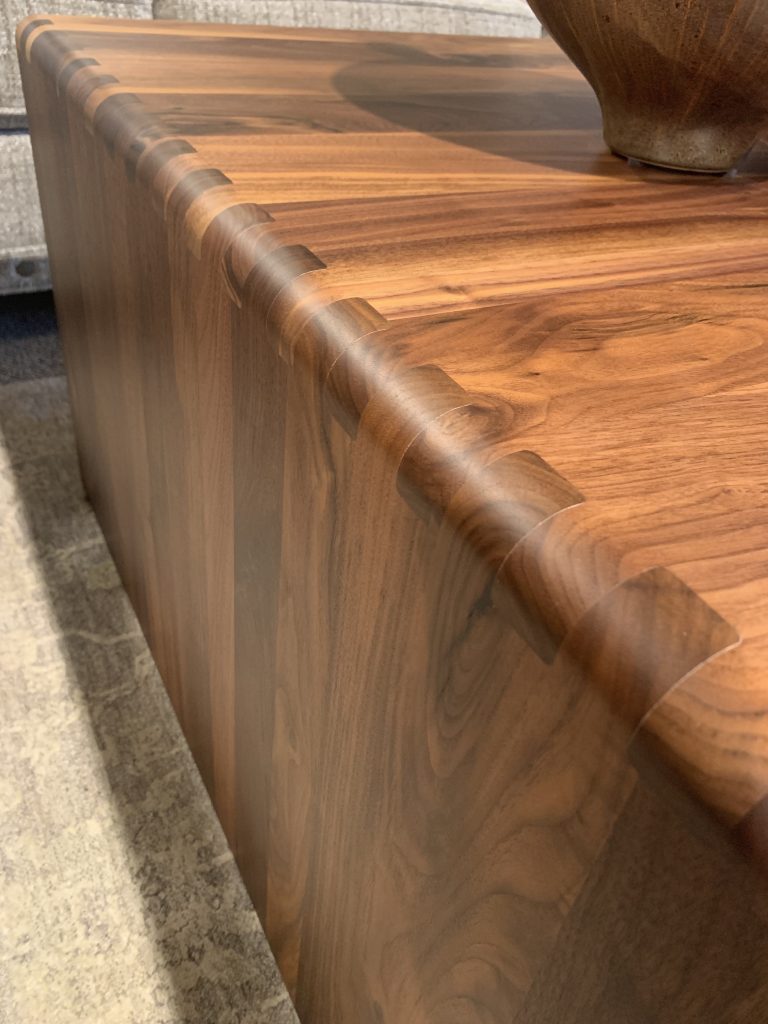
Whichever style you go with, the same construction details separate furniture that lasts thirty years from furniture that wobbles in three. Look for solid hardwood throughout, not just on the front-facing surfaces. Check that the drawers use dovetail joints rather than staples or glue. Run a drawer in and out a few times and feel whether it glides smoothly or scrapes. Solid wood drawer bottoms are a good sign. So is a dust panel between drawers, which keeps clothes from one drawer from sliding into the next.
The Amish-built bedroom pieces we carry at Millwest use these construction methods as a standard, not as a premium upgrade. Our bedroom collections include both chests and dressers in every collection, so you can mix and match without worrying about whether the wood and stain will line up. If you want to dig deeper into what makes the construction matter, our post on what Amish direct furniture really means covers the behind-the-scenes side of how these pieces get built.
Wood species matters too, especially in a piece you’ll be opening and closing every day for decades. Our wood characteristics guide breaks down the differences between Oak, Cherry, Hickory, Maple, and the rest of what we carry, and the introduction to wood blog is a good starting point if you’re new to the whole conversation.
Be sure to explore the customization options on our online catalogue of furniture to find what stain and hardware is best for your furniture. Stain and hardware options vary by furniture piece and wood type. Some stains work better on certain woods, and hardware options may vary by collection. Got a specific bedroom layout you’re trying to plan around? Reach out to us and we’ll help you figure out whether a chest, a dresser, or both makes the most sense for your space.
Steve Payne is content writer at Millwest Amish Furniture in Plain City, Ohio. He writes about solid wood craftsmanship, furniture care, mattress selection, and the materials that make Amish-built furniture last for generations. With deep roots in Ohio’s furniture community and direct access to Millwest’s network of Amish craftsmen, Steve brings a practical, experience-driven perspective to every article.