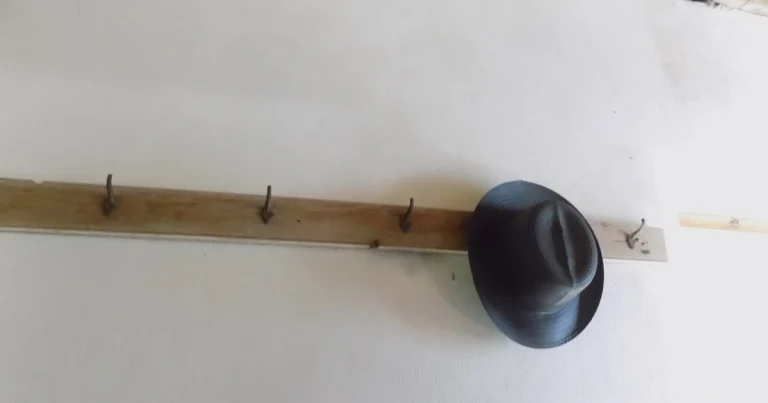
 There is a stone building in Berks County, Pennsylvania that was put up in 1855. Local Mennonite volunteers built it from native sandstone and wood cut out of nearby forests. It was never connected to electricity. It was never connected to water.
Every December, people fill those benches for Christmas carol singing. The song leader stands at the singer’s table, the benches sit in a U-shape around the room, and the group sings in four parts from memory in the dim light. Tickets are free, but you have to reserve one, because the room fills up.
The congregation that built that furniture has not met there regularly since 1954. The people who cut the wood and shaped the benches have been gone for well over a century.
The small building still stands, and it is still furnished with the same solid crafted benches and preacher’s bench it opened with almost 200 years ago.
Most of what gets written about the history of Amish furniture is thin. It repeats the same handful of lines about simplicity and craftsmanship, and it usually gets the dates wrong. So instead, I wanted to let the work speak louder than the claims. I went searching for places that still use furniture crafted so long ago that you can go see it for yourself.
Where the History of Amish Furniture Actually Begins
The Amish trace back to a division within the Swiss Anabaptist movement in 1693. Persecution pushed families toward America, and the first significant waves reached Pennsylvania in the 1730s and after. By the 19th century, the Amish community was large and thriving, and that growth drove settlements even farther west into the Ohio valleys.
That westward move is the part that matters most to us here in Ohio, and almost nobody tells it.
In 1808, Jacob Miller and his sons traveled from Somerset County, Pennsylvania and built a cabin northeast of what is now Sugarcreek. Miller’s nephew, Jonas Stutzman, kept going another five miles and built his cabin on the creek at Walnut Creek. Six more families came from Somerset County in 1810, and two more in 1811. In 1818 the government dropped land prices from two dollars an acre to a dollar twenty-five, and by 1835 the settlement had grown to two hundred and fifty families.
That settlement is now the largest Amish community in Ohio and the second largest in the world. It is also where a lot of the furniture on our floor gets built.
The Chair Stutzman Built
Jonas Stutzman was the first Amish settler at Walnut Creek. He came west from Somerset County, built his cabin on the creek in 1809, and spent the rest of his life there. Around Holmes County he is still called the father of Ohio’s Amish country.
Stutzman was a man of deep conviction. Motivated by his faith in Christ, Stutzman decided to build a seat for Jesus, a gift to honor the King of Kings and the Lord of Lords. In 1853 with the honest perspective that Jesus would receive the gift built for him, Stutzman built the chair higher and wider, larger than any chair meant for an ordinary man. If you could imagine the Amish building a throne for Jesus, this was it.
That chair is still here. It sits at the Amish and Mennonite Heritage Center in Berlin, roughly two hours from our store, and anyone can walk in and see it.
Why It Was Built That Way
So what makes furniture like this last?
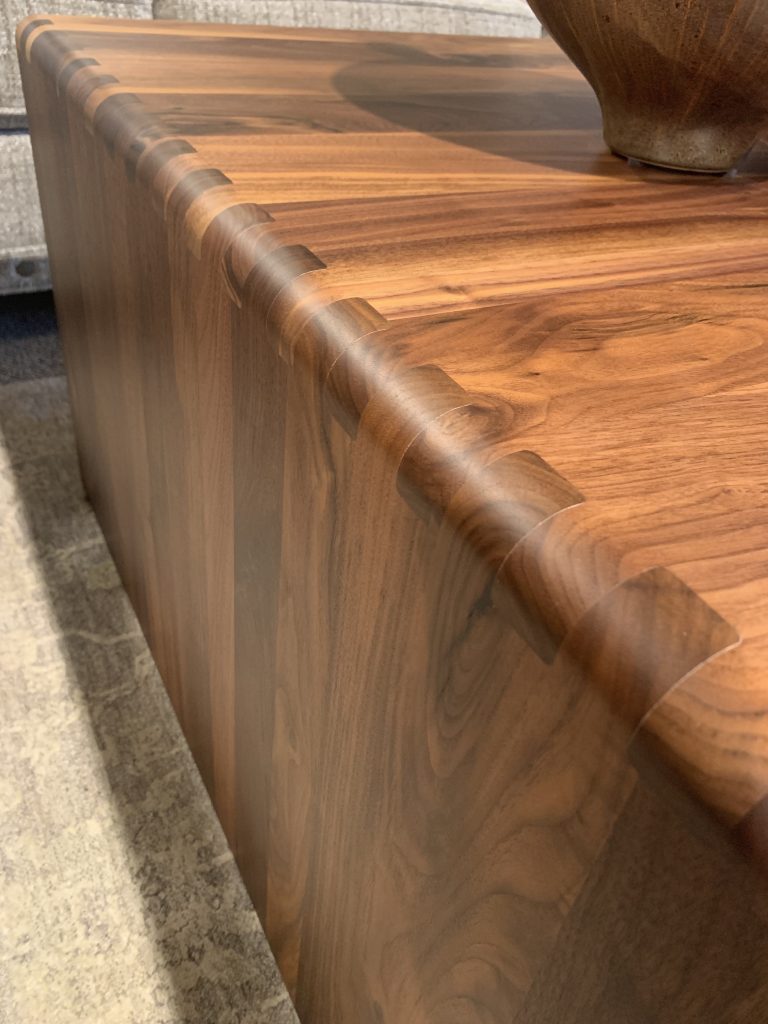
Part of the answer is technique, and it is not mysterious. Mortise and tenon joints. Dovetails. Wooden pegs. Solid stock rather than veneer over particle board. If you want the specifics, we broke the joinery down piece by piece in our guide to the joints that make furniture last, and wood choice matters just as much, which is why quarter-sawn white oak still commands a premium on our floor.
But technique alone does not explain it. Plenty of 19th century American furniture used the same joints, and plenty of it did not survive.
The rest of the answer is who was doing the building, and why.
The core value in Amish life is captured by a German word, Gelassenheit. The Young Center for Anabaptist and Pietist Studies at Elizabethtown College defines it as yielding oneself to a higher authority. It carries self-surrender, submission, contentment, and a calm spirit. Most importantly, it is described as the opposite of bold individualism that promotes self-interest at every turn.
Think about what that does inside a workshop.
It produces a maker who does not sign the work, because signing it would be pride. It produces a boy who learns the trade standing next to his father, not sitting in a classroom. And it produces furniture built for a neighbor you will see at church on Sunday, which is a quality control system no warranty department has ever managed to reproduce. If a joint failed, the maker heard about it. Not from a call center. From the man sitting across the aisle.
You build differently when you assume your grandchildren will inherit both the piece and your reputation.
The Notebook in the Drawer
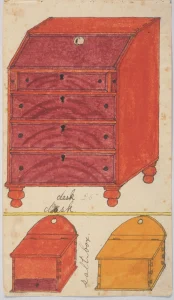 Henry Lapp was born in 1862 in Leacock Township, near Bird-in-Hand in Lancaster County. He was Amish, he was born deaf, and he trained as a carpenter and cabinetmaker in his father’s shop.
Because he could not speak plainly, he sold his work by drawing it. He made pencil sketches of his furniture and household pieces, painted them in watercolor, and carried the little book with him to show customers what he could build. Chests. Washstands. Desks. Cradles. Seed drawers. Mousetraps. By the end of the 1800s the business had grown to include paint and hardware.
Lapp died in 1904, and the notebook disappeared for half a century.
Around 1956, a descendant sold a small bureau Lapp had made to a dealer. The handbook was inside one of the drawers. Plain cover, coarse paper, simply sewn. Nobody had thought it was worth a second look in roughly fifty years. It went to the Philadelphia Museum of Art in 1958, and all forty-seven pages are viewable online today.
A deaf man’s sales catalog, forgotten inside a piece of his own furniture, and both of them survived him.
Lapp was not alone, and he was not the only one working in this tradition. Here in Ohio, Moses K. Troyer and David Hershberger were building grained and decorated furniture in Holmes County through the 1800s. Their names show up in the scholarly record of Anabaptist woodworking, alongside makers in Indiana, Ontario, and across Pennsylvania.
Worth knowing here is that the Amish and the Mennonites were never working from separate playbooks. The Global Anabaptist Mennonite Encyclopedia makes the point that what actually sets these pieces apart from one another is the decoration on the surface, not the design or the construction underneath. A Mennonite in Somerset County and an Amish cabinetmaker in Lancaster cut the same joints. They just finished them differently.
So when I put an 1855 Mennonite bench next to an 1853 Amish chair, I am not stretching to make a point. Strip the paint off both and you are looking at the same craft.
How It Became an Industry
For most of that history, furniture making was something you did in the winter when the fields were quiet. It was not a business. It became one within living memory.
Charles Hurst and David McConnell spent seven years studying the Holmes County settlement, interviewing more than two hundred residents. Their finding is straightforward. The Amish population doubles roughly every twenty years, and the cost of farmland climbed hard. Families needed a living that farmland could no longer provide, despite a deep traditional attachment to farming.
So they built shops. Furniture making, machine repair, lumber yards.
Donald Kraybill’s work describes the shape it took. A family would start an enterprise on or near the farm while other members kept farming. Cabinet shops were among the classic examples. The work stayed close to home, the family stayed together, and the skills that had been passed down for six generations suddenly had a market.
That is why there is an Amish furniture industry at all. The skill had been sitting in these families for six generations. What changed is that they finally needed it to put food on the table.
Three Towns
The same three towns keep appearing in this history, and all three are on our floor.
Sugarcreek is where the 1808 settlers landed. It is also where our Monarch Rest mattresses are handcrafted today.
Berlin is where Stutzman’s chair sits. It is also home to Berlin Gardens, who build our poly outdoor furniture.
And Berne, Indiana, a Swiss Amish Mennonite community, is where Smith Brothers of Berne was founded in 1926. That founding is documented in the same encyclopedia of Anabaptist woodworking that records Troyer and Hershberger in Holmes County.
Three towns out of the historical record, and furniture from all three is standing in our showroom in Plain City right now.
What the Benches Are Actually Telling Us
None of this means old furniture was magic. It was not. Plenty of it broke, and most of what got built went to the burn pile generations ago.
The point is narrower than building something solid, and narrower than a builder taking pride in his work. This furniture was made by people who stood behind it in person. Not through a warranty card or a claims department, but by living down the road from the family that bought it.
They were not building for profit, and they were not building to be remembered. They were building for their families, their neighbors, and their church. They were building to be useful, and to be counted on.
That is still how the shops we buy from work.
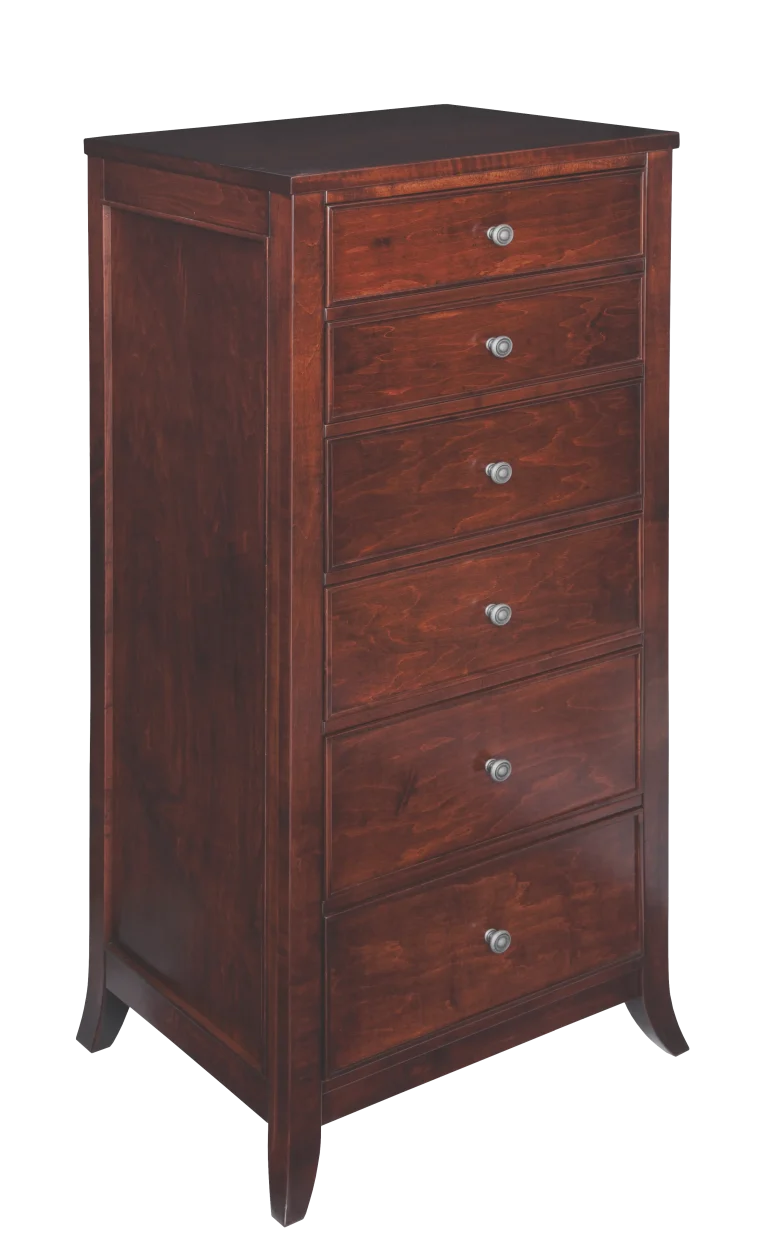
You can see it in a dining table that gets tighter rather than looser over the years, or in a chest of drawers with dovetails you can run your thumb across. If you want to understand what the wood itself brings to that, our wood characteristics guide walks through how each species behaves.
An heirloom is not something you buy. It is something a piece becomes, later, if it was built right in the first place.
The people who built those benches in 1855 never used the word. They just made something worth sitting on, and then 170 years of people sat on it.
*Photo of Alleghany Meetinghouse owned by The Plain Professors
Steve Payne is content writer at Millwest Amish Furniture in Plain City, Ohio. He writes about solid wood craftsmanship, furniture care, mattress selection, and the materials that make Amish-built furniture last for generations. With deep roots in Ohio’s furniture community and direct access to Millwest’s network of Amish craftsmen, Steve brings a practical, experience-driven perspective to every article.