There’s something about a four-poster bed that makes a room feel finished in a way no other piece of bedroom furniture can match. It anchors the space. It draws the eye. And done right, in solid hardwood, by people who actually know what they’re doing, it becomes the kind of heirloom piece that gets passed down rather than replaced. If you’ve been thinking about a solid wood four-poster bed and aren’t quite sure where to start, this guide should help.
I’ll be honest, four-poster beds intimidate a lot of first-time buyers. They look formal. They feel like a commitment. And there’s some real confusion about this style. My parents had one and it always impressed upon me that my parents were some kind of important people. Royalty maybe. As an adult, now I know they just liked the style but even as an adult I find there’s something elegant about them and, for me, still intimidating and confusing. How high should the posts be? Do they convey anything about me? Are there modest post heights, grandiose? Should they be paired with a canopy frame or not? And at the end of all these kinds of questions…I still like them. I’d ask the questions and probably buy the one I liked the most regardless of what fashion says about it, because it’s my taste, and it would be in my bedroom. If you like it, that’s what matters. So let’s clear all that up.
What Actually Counts as a Four-Poster Bed
A four-poster bed is, simply, a bed with four vertical posts at each corner. That’s it. What changes from one design to the next is how tall those posts are, whether they connect across the top, and what shape the posts themselves take.
You’ll see three general categories:
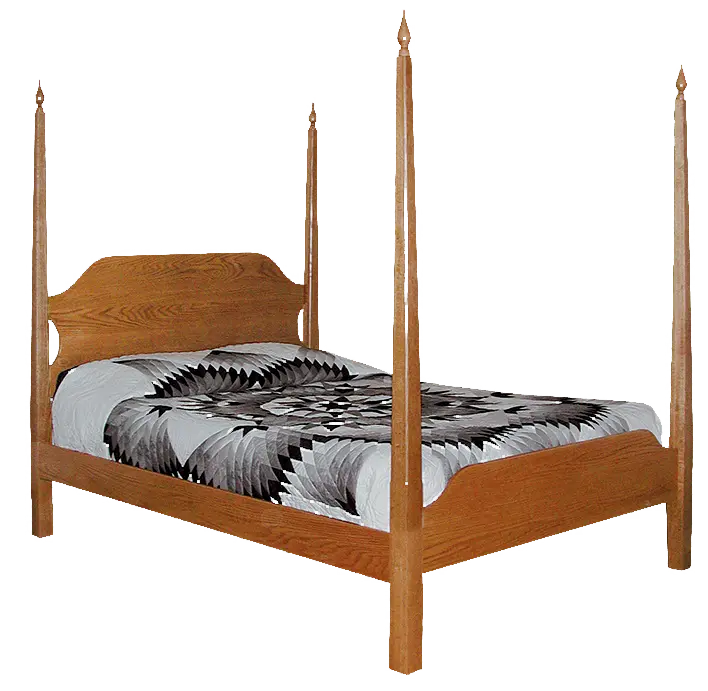
A traditional four-poster bed has four tall posts but nothing connecting them at the top. The posts might rise three or four feet above the mattress, sometimes more. The look is stately without being enclosed.
A canopy bed adds a frame connecting the tops of the posts, originally designed to hold curtains or fabric. Canopy beds tend to feel more dramatic and traditional.
A low-post bed keeps the four-post structure but with shorter posts, sometimes barely rising above the headboard. These give you the classic silhouette without overwhelming a smaller bedroom.
Most of what people search for when they look up “wood four-poster bed” or “wooden four-poster bed” falls into the first category, the traditional post style with no canopy frame on top.
Why Solid Wood Matters Here, More Than Almost Anywhere Else
A four-poster bed is one of the few pieces of furniture in your house that’s almost entirely structural. The posts aren’t decorative add-ons, they’re load-bearing parts of the frame, and they take stress every time someone sits on the edge of the bed or turns over in their sleep.
Cheaper four-poster beds use veneered MDF or hollow posts wrapped in wood-look material. They look fine on day one. Three years in, they wobble. Five years in, the joinery cracks where the rails meet the posts. Solid hardwood doesn’t have that problem. The mass of the wood absorbs movement, the joinery stays tight, and a properly built solid wood four-poster will outlast everything else in the room.
The wood species you choose affects both the look and the structural strength. Harder woods like Hard Maple, Hickory, and Quarter Sawn White Oak handle stress beautifully and hold their finish for decades. Softer woods like Cherry develop a richer patina over time but may show wear sooner in high-traffic spots. Our wood characteristics guide breaks down the trade-offs in detail, and the Janka hardness scale post gives you the technical numbers if you’re the data-driven type.
The Four-Poster Oak Bed Question
A lot of folks specifically search for a four-poster oak bed, and there’s a good reason for that. Oak is the classic four-poster wood, the one that shows up in antique pieces, in Shaker-influenced designs, and in just about every American furniture tradition that values strength. Oak takes stain well, accepts a wide range of finishes from light golden tones to deep walnut shades, and the grain pattern reads as warm and traditional rather than fussy.
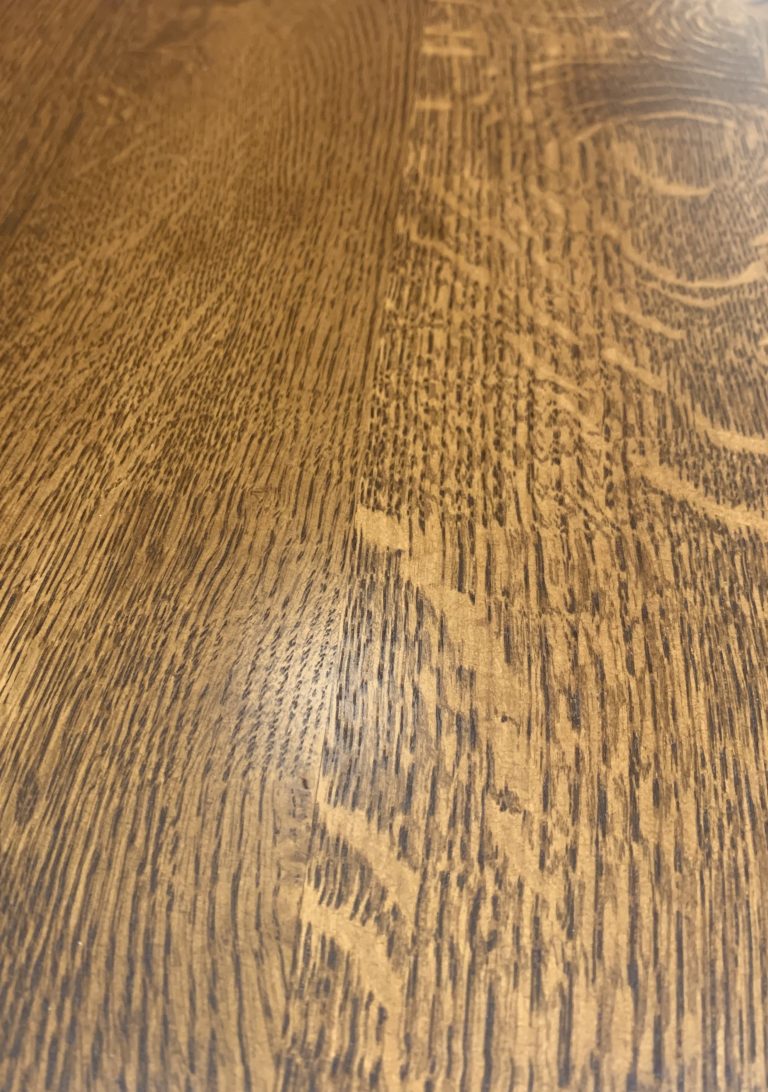
Quarter Sawn White Oak is worth a special mention here. It’s cut differently than standard oak, which produces a distinctive ray-flake grain pattern across the boards. On a four-poster bed, especially in a Mission or Arts and Crafts style, Quarter Sawn White Oak looks stunning. The grain pattern catches light in a way that flatter cuts of oak don’t.
Red Oak, Hickory, and Cherry are also popular choices for four-poster beds, each with its own character. Cherry darkens and warms over time, Hickory shows dramatic color variation between the heartwood and sapwood, and Red Oak gives you that classic pinkish-brown tone that pairs beautifully with most bedroom palettes.
Style Considerations
Beyond the wood species, the style of the four-poster bed itself matters a lot. A Shaker-style bed frame keeps the lines clean and the posts simple, often tapered, with minimal ornamentation. A Mission-style bed leans into straight lines and visible joinery. A more traditional or Victorian-influenced four-poster might feature turned posts with decorative shaping along the length.
Hand-crafted bed frames from Amish workshops give you access to all of these styles, often with customization options at every step. You can specify post height, headboard style, footboard design, and the level of ornamentation. It’s not a pick-from-three-options situation. It’s a genuine custom build.
What a Four-Poster Bed Actually Says
The honest answer is, not much, and certainly nothing it didn’t used to. Four-posters started out practical, designed to hold curtains for warmth and privacy back when central heating wasn’t a thing. They’ve drifted in and out of association with formality, wealth, and tradition over the centuries, but today they read mostly as confident and intentional. A modest low-post bed in cherry feels warm and grounded. A tall, turned-post bed in Quarter Sawn White Oak feels more traditional and stately. Neither is making a louder statement than the other. They’re just different statements, and both are valid. Buy the one you actually want to sleep in.
Sizing and Room Considerations
Four-poster beds have presence. That’s the whole point. But that presence can overwhelm a small room if you’re not careful.
A few practical considerations. Ceiling height matters, since tall posts in an eight-foot ceiling can feel cramped, while nine or ten-foot ceilings let the posts breathe. Leave at least two feet of space around the bed wherever possible, because four-poster beds need room to be appreciated. Consider whether you’ll want bedside lamps. If yes, the posts shouldn’t compete with nightstand lamps for vertical space. And finally, king-size four-poster beds are dramatic but demand a generous bedroom, while queen and full sizes work in more modest spaces.
What to Look for When Buying
If you’re shopping for a solid wood four-poster bed, here are the construction details worth checking. The bed should specify a solid hardwood species, not just “hardwood” as a vague term. Veneered or composite materials should be disclosed. The posts should be solid wood throughout, not hollow or filled. Rail-to-post joinery should use traditional methods like mortise and tenon, ideally with bolt-on hardware that lets you disassemble the bed for moving without weakening the joinery. Slat systems should be solid wood, not metal or particleboard.
At Millwest, the four-poster and post beds in our collections are built by Amish craftsmen using exactly those construction methods. You can browse our solid wood bedroom sets to see the full range, and if you’re trying to decide whether to add a matching dresser or chest to the room, our post on chest of drawers vs. dresser covers the practical differences.
Be sure to explore the customization options on our online catalogue of furniture to find what stain and hardware is best for your furniture. Stain and hardware options vary by furniture piece and wood type. Some stains work better on certain woods, and hardware options may vary by collection.
A four-poster bed isn’t an impulse buy, and it shouldn’t be. Browse our online catalogue, measure your bedroom, and take your time.
Steve Payne is content writer at Millwest Amish Furniture in Plain City, Ohio. He writes about solid wood craftsmanship, furniture care, mattress selection, and the materials that make Amish-built furniture last for generations. With deep roots in Ohio’s furniture community and direct access to Millwest’s network of Amish craftsmen, Steve brings a practical, experience-driven perspective to every article.